
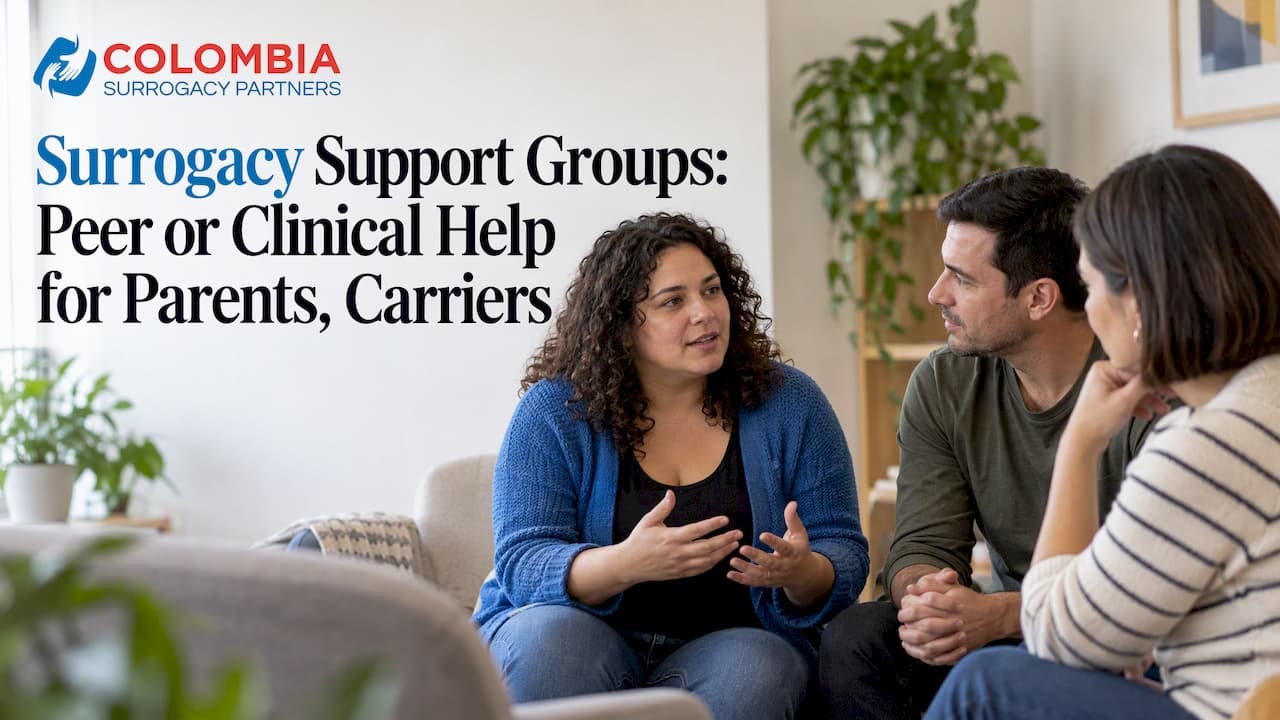
If you want emotional connection during surrogacy, the fastest way is to join a vetted support group: start at national nonprofit listings, agency-run groups, or moderated online forums. These spaces offer peer understanding, practical tips, and a place to process the emotional weight of the process. Clinical guidance from organizations like ACOG reinforces why this support matters at every stage.
TL;DR:
- RESOLVE listings let intended parents and carriers search by location or topic and RSVP to virtual groups; agency groups may be limited to clients.
- Meetings usually last 60 to 90 minutes; cohort groups often meet weekly or biweekly for six weeks, while clinician led sessions may charge fees.
- ACOG recommends separate, independent mental health counseling for intended parents and carriers; carriers also need independent legal counsel, which peer groups cannot replace.
- Before joining, verify facilitator credentials, confidentiality rules, moderation, and fees; avoid groups that pressure members for sensitive documents or conceal agency ties.
Table of Contents
- Where to find surrogacy support groups: listings, agencies, and forums
- Group formats: peer-led, professional-led, and specialized options
- What to expect from a typical support group meeting
- Why clinical guidance supports psychosocial counseling in surrogacy
- How to choose a safe, trustworthy support group
- How to join and participate in a support group
- What peer connection meant during our clients' journeys
- How we help you build a support network during surrogacy
- FAQ
- Sources
Where to find surrogacy support groups: listings, agencies, and forums
Several reliable channels exist for intended parents and gestational carriers seeking peer connection.
- National nonprofit listings: RESOLVE maintains searchable support-group listings that include both professionally led and peer-led virtual groups, often using cohort or recurring formats. You search by location or topic, then RSVP directly through the listing.
- Agency-run and clinic-based groups: Many agencies offer social-worker-led groups and peer mentorship specifically for carriers, separate from intended-parent programming. These tend to be tied to a specific clinical or legal process rather than open to the public.
- Moderated online forums: Hubs like WhatToExpect's Surrogacy Central give intended parents and carriers a place to share experiences, timelines, and day-to-day questions outside scheduled meetings.
- Local meetup platforms: Search using terms like "surrogacy support," "gestational carrier group," or "intended parent meetup," and check whether a host discloses their credentials or agency affiliation before joining.
Virtual options have made most of these accessible regardless of where you live, which matters if local in-person groups are scarce in your area.
Group formats: peer-led, professional-led, and specialized options
Surrogacy support groups vary by who leads them and how they're structured.
- Peer-led groups connect you with others who have lived the process firsthand; they tend to be informal and lower cost.
- Professionally led groups are facilitated by a therapist or social worker and often focus on specific emotional skills, like managing anxiety during the match or processing grief after birth.
- Cohort groups meet for a set number of sessions, often six weeks, which builds stronger bonds than open drop-in formats and reduces feelings of isolation.
- Specialized groups serve carrier-only, intended-parent-only, LGBTQ+-focused, or postpartum populations, which lets conversation go deeper than a mixed general group allows.
Virtual groups offer flexibility and privacy, while in-person groups often build closer relationships over time.
Pro Tip: If you're unsure which format fits, try one drop-in session before committing to a multi-week cohort.
What to expect from a typical support group meeting
Most groups follow a predictable rhythm, which helps first-time attendees feel less uncertain about what's ahead.
- Common topics include communication with your match, legal and financial questions, pregnancy updates, and attachment or grief.
- Session length usually runs 60 to 90 minutes, with weekly or biweekly cadence for cohort groups.
- Cost varies: peer-led groups are often free or low-cost, while professionally led cohorts typically charge per session for clinician time.
- Facilitator credentials matter. Look for a licensed marriage and family therapist (LMFT), a licensed clinical social worker, or an experienced carrier trained in peer facilitation.
Groups generally set confidentiality expectations at the first session, asking members not to share personal details outside the group and to respect each person's pace in disclosing their story.

Why clinical guidance supports psychosocial counseling in surrogacy
Peer support and clinical counseling serve different but complementary roles. ACOG recommends psychosocial education and separate, independent mental-health counseling for both intended parents and gestational carriers as part of ethical surrogacy care. ASRM's ethics guidance similarly treats psychological evaluation and counseling as essential, alongside independent legal counsel for carriers to protect against coercion.
Counseling should explicitly address effects on the carrier's family and children, while independent legal counsel protects a carrier's autonomy throughout the arrangement.
Peer groups offer ongoing emotional connection, but they don't replace the clinical screening and individualized counseling that professional guidance calls for before and during the journey.
How to choose a safe, trustworthy support group
A few checks before joining help you avoid wasted time or exposure to unmoderated misinformation.
- Confirm facilitator qualifications: ask whether the leader is an LMFT, social worker, or trained peer facilitator.
- Ask about confidentiality policy: a well-run group states clear rules about sharing outside the session.
- Check moderation practices: active moderation in online forums prevents harmful advice from spreading unchecked.
- Clarify cost and scope upfront: a trustworthy group discloses fees and what topics it does and doesn't cover.
Red flags include pressure to share sensitive medical or legal documents early, groups that function as undisclosed recruitment pipelines for an agency, or hosts who discourage questions about their background.
Pro Tip: Before your first session, ask the host directly: "Who facilitates this group, and what's your confidentiality policy?"

How to join and participate in a support group
Getting started takes a few simple steps.
- Search national listings or forums using specific terms like "gestational carrier support" or "intended parent group."
- Send a brief RSVP or intro message stating your stage in the process and what you're hoping to gain.
- Verify the facilitator's credentials before your first meeting.
- Once inside, use "I" statements, respect confidentiality, and follow the group's stated norms.
If you notice signs of a perinatal mood or anxiety disorder, such as persistent sadness or intrusive worry, ACOG recommends prompt screening and referral rather than waiting for the next group meeting. Our guide on preparing for the emotional side of surrogacy covers more on setting expectations early.
What peer connection meant during our clients' journeys
We've seen time and again that intended parents who connect with peers feel less isolated during the wait between matching and birth. One client told us that a single conversation with another intended parent about managing updates from their carrier eased weeks of anxiety. We emphasize inclusivity by pointing individuals toward community resources that fit their specific family structures, not a generic list.
— Florent Letronne, PhD
How we help you build a support network during surrogacy

Finding the right support group is one piece of a larger puzzle, and we built our surrogacy facilitation services to handle the rest. We connect intended parents with vetted psychosocial resources, clinician referrals, and legal guidance throughout the process, so you're never piecing together support on your own. Our programs serve international couples, gay couples, lesbian couples, transgender couples, heterosexual couples, and singles.
| What you get | Why it matters |
|---|---|
| Coordinated legal and medical guidance | Helps manage multiple providers |
| Referrals to psychosocial resources | Supports peer groups with clinical resources |
| Inclusive program design | Aims to serve LGBTQ+ individuals, singles, and international clients |
Visit our Surrogacy for Singles page or read about affording surrogacy to see how a coordinated approach fits your situation.
This article is general information, not a substitute for advice from a qualified doctor. Consult a qualified healthcare professional about your own circumstances before acting on anything here.
FAQ
How can intended parents get money for a surrogate?
Funding typically comes from personal savings, surrogacy-specific loans, grants, or employer fertility benefits, depending on your situation. Our guide to affording surrogacy walks through common financing paths in more detail.
Can a surrogate experience postpartum depression?
Yes, gestational carriers can experience postpartum depression or other perinatal mood disorders after birth, just as any birthing person can. ACOG recommends routine screening and referral pathways for perinatal mental health conditions during and after pregnancy.
Can a single man become a parent through surrogacy?
Yes, single men can pursue parenthood through gestational surrogacy, often using donor eggs alongside a gestational carrier. Programs built for singles address the specific legal and logistical steps involved in this path.
What risks does a gestational carrier face in surrogacy?
Surrogacy carries the same physical risks as any pregnancy, along with emotional considerations that professional guidance treats seriously. ASRM ethics guidance recommends psychological evaluation, counseling, and independent legal representation for carriers to protect their autonomy and address effects on their own families throughout the process.
Sources
- Family building through gestational surrogacy | ACOG
- Integration
- Find a support group | RESOLVE
- Surrogacy Central | WhatToExpect community